
On this page
- Short Term Visitor Accommodation (STVA)
- Demand for STVA
- What are the requirements for STVA?
- What Next
- What are the risks of non-compliance?
- Increasing STVA Compliance
Short Term Visitor Accommodation (STVA)
This page has been developed for property owners, property developers, and property management companies to provide an overview of Mackenzie District Council’s compliance requirements for Short-Term Visitor Accommodation (STVA).
The aim is to outline the responsibilities for anyone planning to offer STVA in the district.
Demand for STVA
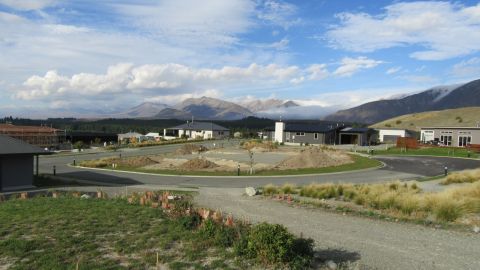
Mackenzie District has become a highly valued destination for international and domestic visitors, and demand for STVA has increased significantly.
Property owners and developers, and property management companies have recognized the potential of this market, resulting in increase in the number of properties where STVA is offered.
In some cases, this drive to meet the demand has contributed to STVAs which do not meet the Council’s regulatory requirements.
What are the requirements for STVA?
When planning to use a property for STVA it is important to understand the relevant rules and standards and ensure that compliance can be achieved. The relevant rules and standards are set by legislation and administered by the Council. These are:
- Planning (District Plan) – Determining if the STVA activity can be carried out under permitted activity rules in the District Plan or otherwise authorized by a land use resource consent which may be subject of conditions.
- Financial Contributions (District Plan) - A financial contribution towards the provision of land and/or facilities for open space and recreation,payable to the Council when new or additional STVA is established.
- Building – Ensuring that physical building work and the use of buildings used for STVA meets all applicable requirements, including in relation to preventing the spread of fire, and accessibility.
- Rates – An important revenue source for Councils. When property is used for STVA a ‘Tourism and Promotion Charge for Secondary Accommodation Properties’ is applied. Charges are based on the capital value of the property used for STVA.
The compliance pathway and requirements that must be met along the way will depend on the nature and scale of the STVA activity and where it is located.
Smaller scale STVA compliance requirements
In general, a STVA where a single group of up to six guests can be accommodated as one booking in one residential unit, is a permitted activity in the district plan.
If an established building was used in this way, it would not constitute a change of use of the building so would not need more strict building code requirements to be met.
If the same residential unit, or another residential unit on the site is occupied and used by its owner, the differential rating category is – Tourism and Promotion Charge - Secondary accommodation.
Fewer residential units used for STVA will result in a lower value of financial contributions.
Larger scale STVA compliance requirements
Where more than six paying guests can be accommodated, or a site has more than one residential unit being used for STVA, this is not a permitted activity in the district plan. Therefore, a land use resource consent is required.
Some types of STVA, such as backpackers, hostels, motels and hotels, are commercial visitor accommodation and cannot be carried out as a permitted activity in the district plan.
The use of an existing building for these activities is likely to qualify as a change of the use of the building. This means that our Building Control Authority must be notified. There may also be increased building code compliance requirements that need to be met in order to operate this type of activity.
A new building planned for these activities may have increased code compliance requirements above those of a standard detached residential dwelling.
The use of, or creation of more residential units used for STVA will result in a higher value of Financial Contributions.
What Next
Planning a new STVA activity?
The best and easiest way to become compliant is to put the right things in place before the STVA activity starts.
If you are still unsure about the status of your planned activity after reading this factsheet, you can contact our Planning Department by e-mail to planning@mackenzie.govt.nz.
If you plan to build a new building or carry out other building work which requires building consent, you will need to complete a building consent application form. As well as recording the type of building work you will also be asked for the ‘intended use’ where you must specify if the building will be used for STVA. It is important the form is completed correctly as this will also help us determine the status of your project and the compliance requirements.
Already running a STVA activity?
If you are already operating a STVA and are unsure about your compliance status, we strongly recommend that you get in touch with our Planning Department to confirm your situation e-mail planning@mackenzie.govt.nz.
NOTE: It is important to note that the compliance requirements under the District Plan may apply to both the property owner and any property manager (or property management company depending on the nature of property management services being provided).
What are the risks of non-compliance?
There are various risks involved with establishing or continuing to operate non-compliant STVA, including:
Financial
- Investigation of non-compliant STVA and enforcement of the rules is time consuming and expensive. These costs are passed on to the STVA providers through Council’s fees and charges.
- Where the use of a building has changed, such as splitting a house into separate residential units for STVA, our Territorial Authority (Building) may issue a Notice to Fix. The cost of this is passed on to the building owner through Council’s fees and charges.
- The Council also has powers under the Resource Management Act 1991 to issue abatement notices to cease non-compliant STVA activities, impacting on future bookings. Council’s fees and charges also apply when an abatement notice is issued.
Legal
- Infringement notices may be issued, and in some cases where there is ongoing and significant non-compliance, this could lead to prosecution, with potential for significant fines to be imposed.
- If an event occurs where non-compliance is a factor in injury or death to the user of a building, this may have serious legal implications for the STVA operator/s.
Reputational
- In a competitive STVA market, maintaining a reputation as a professional, safe, and compliant STVA operator, is advantageous. Reputation may suffer when non-compliance is identified and actions are taken against an operator.
Insurance
- If a building is being used for STVA without the necessary building or planning consents or compliance, in the event of an insurance claim, there is a risk that a claim may not be accepted.
- Insurance policy requirements vary between insurers. The Insurance Council of New Zealand recommends that those providing STVA or considering it, to talk to their insurer about what this may mean for their insurance cover.
Increasing STVA Compliance
In Mackenzie District, non-compliance with STVA requirements is widespread. Council is actively working to increase compliance.
Engagement and education are the first steps in this process so that compliance requirements can be fully understood.
This will be followed by an increase in monitoring and investigation. Where non-compliant STVA is identified, monitoring and investigation fees will be charged, and formal compliance and enforcement actions will be taken.
Non-compliance with Council’s Financial Contributions rules will be considered a serious matter when we decide on any enforcement action to be taken.
Where STVA is assessed as ‘Secondary Accommodation’, the property rates will be adjusted. You will be advised of this change to your rates.
If you are concerned about a possible non-compliant STVA activity, this can be reported to us by sending an e-mail to info@mackenzie.govt.nz or calling us on 0800 685 8514.