
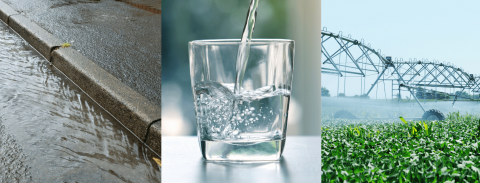
Water reform, as part of the Government’s Local Water Done Well legislation, means big changes are coming to the way our water is delivered and paid for.
This is one of the most important issues your Council has made as part of the current term, and it’s one MDC has taken very seriously.
It is highly likely that the rates and user charges paid by our ratepayers for water will need to increase significantly to meet the requirements set down by Government.
UPDATED Water Services Delivery Plan Submitted - March 2026
On 26 March 2026, Mackenzie District Council submitted its Updated Water Service Delivery Plan to the Department of Internal Affairs.
This plan updates the plan which was submitted in September 2025 which, for several reasons, was not accepted. MDC was asked to submit a revised plan.
Following this decision, MDC’s Elected Members and Executive Leadership Team re-engaged with Timaru District Council on the potential to establish a joint Water Services Council Controlled Organisation (WSCCO). On 24 February 2026 Councillors voted to join the WSCCO with Timaru.
This updated Plan was drafted based on this decision, and with updated financials for a combined Timaru + Mackenzie WSCCO using the previously submitted 10-year forecasts from each Council.
Read the updated Water Services Delivery Plan here.
Water Services Delivery Plan - September 2025
On 1 September 2025, Mackenzie District Council submitted its Water Service Delivery Plan.
This followed a Council decision on 26 August, where Councillors voted to approve the plan for an in-house water services business.
The Plan outlined how water services were to be delivered and financed in a manner compliant with the Government’s Local Water Done Well reforms. The Government required all councils to submit a Water Services Delivery Plan that complied with the legislation for meeting drinking and wastewater standards, and which was financially sustainable.
The Plan was submitted to the Department of Internal Affairs, who made the decision seek amendments.
Click here PDF, 1960.01 KBto read the September 2025 MDC Water Services Delivery Plan
What is Local Water Done Well?
In December 2023 the Government announced a new direction for water services (drinking water, wastewater and stormwater services) policy and legislation which it has called Local Water Done Well.
The Government’s intention is to ensure people pay cost-reflective prices for water services, that those services are delivered to an acceptable quality, and that water services providers are investing sufficiently in infrastructure.
Key components of Local Water Done Well include:
- Fit-for-purpose service delivery models and financing tools
- Ensuring water services are financially sustainable
- Introducing greater central government oversight, economic and quality regulation
Read more on the Local Water Done Well legislation here.
What has been the process so far?
Council engaged and consulted with its community on its proposed model for delivering water services under Local Water Done Well from Friday 9 May to Friday 13 June 2025.
Council proposed two models for the future delivery of water services:
Option 1 – Keeping these services in-house and overseen by our Council, but there would be some changes to help us meet new government requirements (This received 56.5% community support).
Option 2 – Working with other councils to set up a new water organisation to manage our water services. This could be across three or four districts, or others, based on what our communities need and want, and on the final council decisions (This received 43.5% community support).
Council decided to adopt an in-house water services delivery model at their meeting on 15 July 2025, following community consultation and extensive deliberations.
Following this decision, MDC staff prepared and submitted a Water Services Delivery Plan that aligned to the requirements set by the DIA.
What happened next?
September – October 2025: DIA Assessment
DIA assessed all aspects of our Plan against legislative requirements, with a focus on identifying any risks or issues that may impact their ability to accept the plan.
To assess whether a council’s water services delivery was financially sustainable, three components were considered:
- Revenue sufficiency – was there sufficient revenue to cover the costs (including servicing debt) of water services delivery?
- Investment sufficiency – was the projected level of investment sufficient to meet regulatory requirements and provide for growth?
- Financing sufficiency – were funding and finance arrangements sufficient to meet investment requirements?
October – December 2025: DIA review and response
After review, the DIA Plan Review Panel recommended that MDC amended the Water Services Deliver Plan.
The Plan Review Panel included senior leads from key government agencies involved in Local Water Done Well – DIA, National Infrastructure Funding and Financing (NIFF), Commerce Commission, Local Government Funding Agency (LGFA), Water Services Authority, and an external observer.
Useful Links
- MDC Updated Water Services Delivery Plan - click here
- MDC Water Services Delivery Plan: September 2025 - click here PDF, 1960.01 KB
- Lets’ Talk Water reform – click here
- Local Water Done Well, DIA – click here
Previous Statements
In the November 2024 edition of the Mackenzie Messenger the Mayor published the following update on Local Waters Done Well.
Local Waters Done Well – What does it mean for Mackenzie?
In this edition of the Messenger I want to make you aware of an important piece of work that Council is undertaking in relation to water services.
The Coalition Government came to power and agreed with us that Councils and the communities they serve should retain their property rights in their water assets.
They have released their plan to address New Zealand’s long standing water infrastructure challenges and have started introducing the relevant legislation.
We need to give effect to the current and future legislation of “Local Waters Done Well”. As part of this reform, we are required to decide on an appropriate structure for delivering water and wastewater (two waters). We must also decide if stormwater is included or not (three waters).
Key decisions for our Council will be around the governance, delivery structure and financing arrangements for the ongoing delivery of two or three waters for our community. This includes considering joint structures with neighbouring Councils to deliver the services.
I believe this will be a once in a generation decision and the importance of getting the decisions right cannot be underestimated. We must ensure the financial sustainability of these services and that we can meet the new economic regulation requirements.
We have until 1 September 2025 to compile a Water Services Delivery Plan for approval from the Department of Internal Affairs. I am concerned that this means we have less than 12 months to complete an important and significant piece of work.
Given the magnitude of these decisions, there will be a need for ongoing engagement and consultation with our community at the appropriate times. I implore you to participate in opportunities that Council will provide for you to offer your input.
The future costs and affordability of water services for our community, along with the extra compliance costs such as professional commercial governance, and future economic regulation, will likely mean that future costs of water will escalate. Affordability for our community will be a prime concern.
The third piece of water services legislation is to be released in December 2024 and will set out a comprehensive regulatory scheme, with full economic regulation, to govern the Three Waters sector into the future.
In August 2024 a document ‘Water Service Delivery models: guidance for local authorities’ was published by the Department of Internal Affairs. You can find this online on their website at www.dia.govt.nz under Central and local government on the front page.
You can also read more details about this in the Local Waters Done Well paper presented to the Council meeting on 1 October 2024 (item 8) and 29 October (item 8.2) in the agenda. There is a link to meeting agendas and minutes on the front page of the Council’s website: www.mackenzie.govt.nz.
Look out for more from us about this topic as we work through developing our Water Services Delivery Plan.
On 6 March 2023, Mackenzie District Mayor Anne Munro and Chief Executive Angela Oosthuizen presented to the Government’s Finance and Expenditure Subcommittee B on the Water Services Legislation Bill and Water Services Economic Efficiency and Consumer Protection Bill. This is the current stage in the Government’s Three Waters reform project.
They reiterated Council does not support the model or the legislation proposed by government and does support the Community for Local Democracy model proposed.
Mayor Munro talked about the impact on the proposed reforms on the communities of Mackenzie District, concerns about the proposed structure after the reforms, and the need for a sustainable funding model that would be affordable for communities. CE Oosterhuizen looked at issues with specific clauses in the proposed legislation.
The full text of the presentation is available here.
The video of the presentation’s livestream is on Facebook and is available to watch here.
Mackenzie’s presentation starts at about the 55 minute mark.
Submissions are now being accepted by the Select Committee on the Government’s Water Services Entities Bill. You have until 22 July 2022 to have your say.
The bill is the first of two which give effect to the Government’s Three Waters Reform proposals. It establishes the four multi-regional entities, their purpose, their objectives, and their representation and governance arrangements.
The Bill also covers the accountability arrangements for the entities and the other levers communities will have to influence the direction of the entities.
Mackenzie District Council supports the government’s desire to improve three waters infrastructure, but strongly disagree with the current 4 entity model being proposed by the government. We do believe achieving compliance is important and have undertaken major upgrades to achieve this. We also have significant investment planned on three waters to achieve ongoing compliance.
The initial report informing the case for three waters change included an analysis of the economic benefits by the Water Industry of Scotland (WICS). At Mackenzie we have shown that the assumptions in WICS model did not hold true for our District in all instances. Our Council has undertaken independent analysis that demonstrates the underlying foundation supporting a 4 entities model is significantly flawed and the economics do not align with actual and proven costs and revenue. There are many credible alternatives models that deserve analysis and Council believes will deliver far better holistic outcomes to local and central government, mana whenua and our communities.
We are also concerned that one share in Entity D is not enough of a share in a large entity to guarantee an adequate voice for our communities to influence capital investment.
Model of ownership:
Section 166 of the Bill clearly eliminates any rights of Council re any normal definition of ownership. The model of ownership proposed in the Bill falls well below any acceptable definition of ownership giving Council at best “very limited oversight on behalf of the community.
The ownership model is an absolute Clayton’s model. A Claytons proposal that territorial authorities “own” the water entities, but this is ownership in name only, not in substance. Councils will not be able to perform any of the functions of ownership like with any other asset. The shares would have no voting rights, no financial rights and no rights of appointment. They are trying to con the public into thinking that territorial authorities will still have ownership, when all they’ll have is a piece of paper with no rights of ownership.
The transition of assets and debt; the transfer of asset and debt must not negatively impact on our Council’s ability to be a viable organisation (i.e. is not reform by stealth). We await the outcome from the Future for Local Government and the RMA reform to understand the integration of three new pieces of legislation.
The ongoing cost and management of assets; cost and management of any stranded assets must be considered and accounted for, alongside central government speeding up the process and identifying what might “fill the gap” left by waters.
The ongoing affordability of water to our communities remains a concern. A sub regional model would achieve similar economies of scale and provide greater voice for our communities and Council.
Economic Regulator and other legislation being done in piecemeal fashion
This regulation will add transparency and accountability which will go a long way in resolving the issues. Viewing the legislation in piecemeal fashion is not helpful. Economic regulation and consumer protection are important legislation to ensure there are mitigations to manage the pricing and affordability of water.
There appears to be an unwillingness to change the current unsustainable funding model for local government which restricts and limits investment in Infrastructure, especially in small councils with small ratepayer bases but high peak tourism seasons.
We will be making a submission on the Water Services Bill to the Select Committee. We will also make this available on our website.
This is the public’s opportunity to have their say on the three Water Reforms structure through parliament’s Select Committee process.
The government’s evidence shows that, as a nation, there are problems with how we’ve maintained and improved our water service infrastructure. Without change, the safety, reliability and affordability of these services will lead to more New Zealanders getting sick from contaminated drinking water, more sewage spills and increases in cost. A significant driver of this issues has arisen due to the very limited funding sources available to Councils and major restructuring and centralisation does not address these fundamental issues.
Details of the entire reform process, the programme, the reports and updates from working groups and the Steering Committee can be found on the webpage of Te Tari Taiwhenua | Department of Internal Affairs (DIA) at: https://www.dia.govt.nz and type ‘three waters reform information’ into the search function.
If you would like an easy-to-read up-to-date summary, you can find this on the same DIA webpage, or search online for ‘Three Waters Reform boiled down – a quick overview’
If you would like to read the Water Services Entities Bill, find what has been said about the bill in Parliament, or learn more about making a submission to the Select Committee, you can find links to all of these at: https://www.parliament.nz and follow the links to > Parliamentary Business > Select Committees > Make a submission